
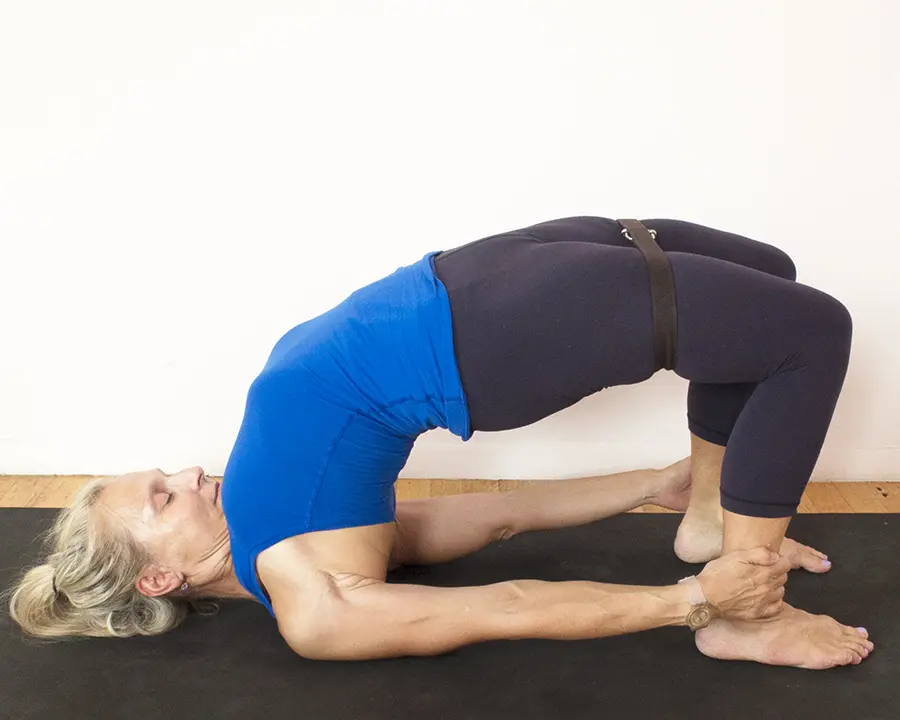
Quadratus Lumborum Spasm
DEFINITION: Involuntary prolonged and painful tightening of the large rectangular muscles extending from the lowest ribs to the iliac crests on either side of the spinal cord. BENEFICIAL POSES: Janu Sirsasana, Ardha BaddhaPadma Paschimottanasana, Paschimottanasana EXPLANATION: Prolonged stretching of these muscles will usually end the spasm. Janu Sirsasana and Ardha Padma Paschimottanasana stretch the muscles one at a time. In severe cases, where stretching both muscles is just too painful, this “divide and conquer” strategy is often successful. REFERENCES: Although the authors found no studies specifically on spasm in th quadratus lumborum, an investigation on spasm in another muscle, the temporalis muscle, was positive. Bhatia R, Dureja GP, Tripathi M, Bhattacharjee M, Bijlani RL, Mathur R. Role of temporalis muscle over activity in chronic tension type headache: effect of yoga based management.Indian J Physiol Pharmacol. 2007 Oct-Dec;51(4):333-44. Since the temporalis muscle is barely involved in most yoga, it seems even more likely that yoga can reduce spasm in the quadratus lumborum. Dr. Loren Fishman’s medical practice confirms that these methods have been helpful for many patients.